UX Portfolio Design › Chapter 1
Chapter 1 · Free to read
The UX Portfolio: much-maligned & misunderstood
In this chapter, I plan to lay some ghosts to rest and address some elephants in the room. And use too many metaphors. I will leave no stone unturned.
Portfolio =/= portfolio presentation
Let’s start with a necessary clarification. Your portfolio presentation and portfolio ought to be different documents.
When you present your portfolio, you’re in the room or remote and can provide the narrative that accompanies it.
When you share your portfolio in advance, it’s read alone without you, most likely by somebody who has never met you. It has to deliver the narrative in your absence.
For effectiveness, this requires two different but similar documents.
Portfolios are a conversation starter
For most companies, reviewing UX portfolios represents the first step in their recruitment process. No portfolio, no interview. Ineffective portfolio, no interview.
One way to look at it is this: the phone screen or being invited in to present your portfolio – that’s the conversation. Sharing your portfolio in advance – that’s a potential conversation starter.
Wrong tool or not, it doesn’t matter
Occasionally, someone will write that the UX portfolio is the wrong tool. They could be correct, but it doesn’t matter. Hiring managers far and wide have firmly decided: if you want an interview, share your portfolio.
Some senior UX practitioners have held on without a portfolio for a long time. I have bookmarked posts from senior people years ago, declaring that they don’t have a portfolio and never will. Today, those people have portfolios.
My occasional mentor Jared Spool has said that hiring managers should refrain from demanding a UX portfolio as the best designers may not have one. He’s right, for now. But more and more designers have one, and as a candidate, do you want to be the one that doesn’t? I suspect not.
A UX portfolio is a collection of stories
Let’s say I left my home now and grabbed the first person I saw on the street. I could help that person create a UX-style portfolio. How? Quite easily.
A UX portfolio is just a collection of stories. Everyone has stories. Especially work stories.
Sometimes, senior UX managers say, ‘I can’t do a portfolio. I don’t do design directly anymore.’
If you’re a lead designer or manager, your role means you have different stories. Instead of design work, you talk about how you grew your team and facilitated their work. That’s exciting stuff.
If there’s one thing I want you to take away from this chapter, it’s this:
The secret of creating an effective UX portfolio is to use the skills you’ve been trained in or use every day.
Researcher? Discover the needs of hiring managers and deliver your findings!
Designer? Understand user needs and design what meets them!
Another critical point: you are not the primary user of your portfolio. Hiring managers and those involved in the hiring process are your users.
The next time you attend a networking event and a prospective boss or client asks you what you do, what will you say? Producing a UX portfolio means you have a bank of stories to share.
Mastering a skill takes not just time but reflection. Creating your portfolio will be easier if you maintain a work diary or logbook to draw from. So, start one. And now that you have one, use it for reflection. Think about your work. Reflect on your craft. Develop your skills.
Regularly update your UX portfolio throughout your career, not just when job hunting.
Over time, you may see patterns appear in your work preference. You may also observe gaps in skills and knowledge. Use this information to inform your future employment and training decisions.
UX portfolios also clear up confusion. My mate Dave, a UX designer, agreed to meet a prospective client. He spent an hour presenting his previous work. At the very end, he was asked, ‘OK, but where are all the pretty designs?’
Don’t be like Dave. Send your portfolio as a pre-read in advance of meetings.
When the first interview is just a conversation, don’t be surprised if your portfolio guides it.
When putting your portfolio together, ask yourself, ‘What do I want hiring managers to ask me about?’ And leave anything out that you don’t.
A UX portfolio can be less critical if you’re the type of person who can find work through people you already know.
But even in this situation, your pal can use your portfolio to justify your hire to the higher-ups. It’ll help them explain your previous successes quickly.
Ever heard stories of how people found their work in other people’s portfolios? I have. I dug deep, and in every case I saw, the plagiarist copied documents and UI designs. It’s much more challenging to steal stories. So, focus on stories and make them your own.
What is the goal of your portfolio?
To get you an interview? Yes. But what does that mean?
A few years ago, my friend Caroline Jarrett said that a user researcher’s job is to help their team learn about users. Show how you did that.
If you’re a designer or product manager, the goal is for your portfolio to show how you helped your team design the right thing and deliver it on time.
If you’re a manager, your goal may be how you helped your team of researchers and designers help their teams. And how you helped the broader organisation to deliver better products.
There’s a secondary goal.
You need to do more than show that you can do the job. You must also convince the portfolio reviewer they want to work with you.
So, two goals:
- To show you can do the job that the hiring manager is recruiting for.
- To make them feel that they want to work with you.
The poorest-performing UX portfolios fail to meet these goals. They’re often collections of only high-fidelity screen mock-ups or UX deliverables. Even the old industrial design portfolio style of annotated products is insufficient. Stories are what you need.
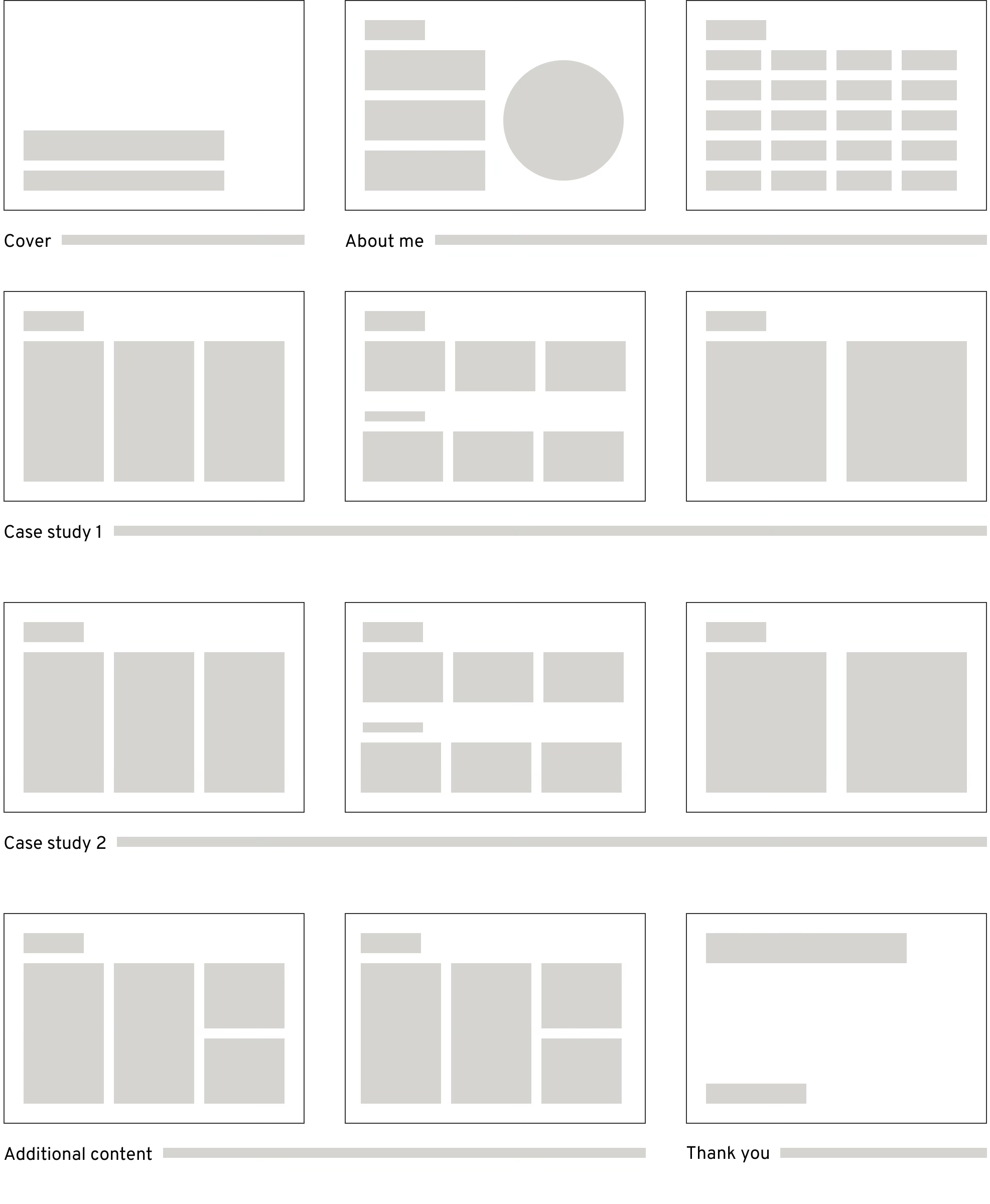
There’s a convention to portfolios now:
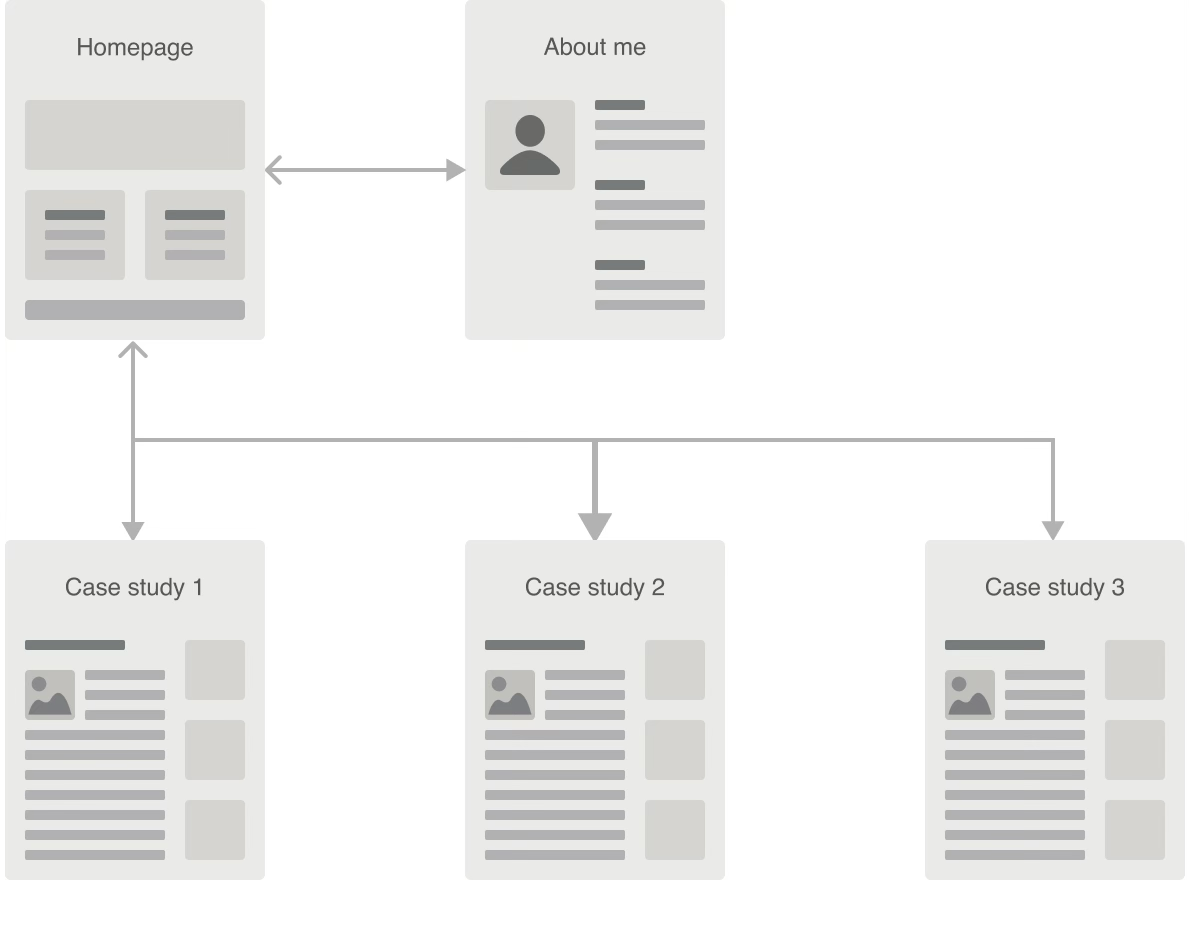
- An intro.
- Biographical content.
- Case studies.
- Then, additional content to provide a more rounded picture of the candidate.
Can you do something else? Sure, but there’s risk involved. Whatever you do, be sure your approach considers user needs.
Next: Chapter 2, in the bookCapturing your stories →
Get the whole book
All ten chapters, plus the Portfolio Planner, the Case Study Canvas and the UX Portfolio Checklist.